
Overview
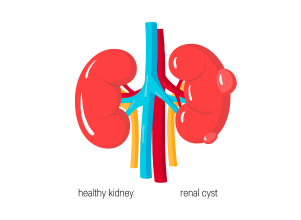
Simple kidney cysts are fluid-filled sacs that form in one or both kidneys. They are usually round or oval in shape and have thin, smooth walls. Simple kidney cysts are common, especially as people age, and are often found incidentally during imaging tests done for other reasons.
Most simple kidney cysts are harmless and non-cancerous. They usually do not affect kidney function and may never cause symptoms or require treatment.
Symptoms
Many people with simple kidney cysts have no symptoms at all. Symptoms are more likely to occur if a cyst becomes large, infected, or ruptures.
When symptoms do occur, they may include:
- Dull pain in the back or side
- Pain in the upper abdomen
- Feeling of fullness or pressure in the abdomen
- Fever, if the cyst becomes infected
- Blood in the urine, in rare cases
Symptoms are often mild and develop gradually.
When to See a Doctor
Consult a healthcare professional if you experience:
- Persistent pain in the side or back
- Fever along with kidney-related symptoms
- Blood in the urine
- Sudden worsening of discomfort
Simple cysts are usually not an emergency, but evaluation helps rule out other conditions.
Causes
The exact cause of simple kidney cysts is not fully understood. They are believed to form when the surface layer of the kidney weakens and develops a pouch that fills with fluid.
Simple kidney cysts are not inherited and are different from genetic conditions such as polycystic kidney disease.
Risk Factors
Factors that may increase the likelihood of developing simple kidney cysts include:
- Increasing age
- Male gender
- Long-standing kidney disease, in some cases
Most people who develop simple kidney cysts are otherwise healthy.
Complications
Simple kidney cysts rarely cause complications. However, problems can occur if a cyst grows large or becomes infected.
Possible complications include:
- Infection within the cyst
- Rupture of the cyst, causing pain
- Pressure on surrounding organs or structures
- Rare interference with urine flow
Serious kidney damage from simple cysts is uncommon.
Diagnosis
Simple kidney cysts are usually diagnosed using imaging studies that clearly show their structure.
Common diagnostic tests include:
- Ultrasound of the kidneys
- CT scan or MRI, if more detail is needed
Imaging helps distinguish simple cysts from complex cysts or solid kidney masses.
Treatment Options
Most simple kidney cysts do not require treatment and only need periodic monitoring.
Treatment may be considered if a cyst causes symptoms or complications. Options include:
- Aspiration and sclerotherapy – where the cyst is drained and treated to prevent refilling
- Minimally invasive surgery – in rare cases of large or symptomatic cysts
The choice of treatment depends on cyst size, symptoms, and overall kidney health.
Monitoring and Follow-Up
If a simple kidney cyst does not cause symptoms, your doctor may recommend regular imaging to monitor for changes in size or appearance.
Follow-up helps ensure that the cyst remains simple and does not develop concerning features over time.
Prevention
There is no proven way to prevent simple kidney cysts. However, maintaining overall kidney health is always beneficial.
Helpful steps include:
- Staying well hydrated
- Managing blood pressure
- Attending regular health check-ups
Most people with simple kidney cysts continue to live normal, healthy lives without limitations.