
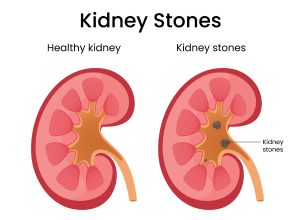
1. What are kidney stones?
Kidney stones are hard deposits of minerals and salts that form inside the kidneys, ranging from tiny sand-like grains to large golf ball-sized stones. They develop when urine becomes too concentrated, allowing minerals to crystallize and stick together, with the most common types being calcium oxalate (70-80% of cases), uric acid, struvite, and cystine stones. These stones can affect any part of the urinary tract, from the kidneys to the bladder.
2. What causes kidney stones?
Kidney stones often stem from dehydration the top cause due to insufficient water intake along with diet factors like high salt, protein, or sugar consumption, family history and genetics; obesity, which significantly raises risk; underlying medical conditions such as diabetes, gout, hyperparathyroidism, or urinary tract infections; certain medications including some diuretics and calcium-based antacids; geographic factors like hot climates that increase dehydration; and metabolic disorders involving abnormal mineral levels in blood and urine.
3. What are the symptoms of kidney stones?
- Severe pain – Sharp, cramping pain in back, side, lower abdomen, or groin
- Pain comes in waves – Intensity fluctuates as stone moves
- Blood in urine – Pink, red, or brown colored urine (hematuria)
- Frequent urination – Constant urge to urinate
- Burning sensation – Pain while urinating
- Cloudy or foul-smelling urine
- Nausea and vomiting – Often accompanies severe pain
- Fever and chills – If infection is present (medical emergency)
- Small stones may pass without symptoms.
4. When should I see a urologist immediately?
Seek immediate medical care for kidney stones if you experience severe pain that prevents sitting still or finding a comfortable position; pain accompanied by fever and chills indicating infection; blood in the urine, especially if new or heavy; difficulty urinating or complete inability to pass urine; nausea and vomiting that prevents keeping fluids down; a history of having only one kidney with any stone symptoms; signs of infection like fever, chills, or burning urination alongside stone pain; or pain persisting more than 24 hours despite pain medication.
5. How are kidney stones diagnosed?
- Medical history and physical examination – Discussion of symptoms and risk factors
- Urine tests – Check for blood, crystals, infection, and mineral levels
- Blood tests – Assess kidney function and mineral levels (calcium, uric acid, creatinine)
- Imaging studies:
CT scan (most accurate – detects 95%+ of stones, shows size and location)
Ultrasound (safe for pregnancy, children, no radiation)
X-ray (KUB – detects calcium stones only)
- Stone analysis – If you pass a stone, save it in clean container for laboratory testing to determine composition.
6. What are the treatment options for kidney stones?
For Small Stones (less than 5mm):
- Watchful waiting – 80-90% pass naturally within few weeks
- Pain management – Medications to control discomfort
- Increased fluid intake – Drink 2.5-3 liters of water daily or see that urine is clear not high colored urine.
- Alpha blockers (Tamsulosin) – Medications to relax ureter muscles and help stone passage
- Medical expulsive therapy – Combination of medications to facilitate passage.
For Larger Stones or Complicated Cases:
- ESWL (Shock Wave Lithotripsy) – Sound waves break stones into smaller pieces (outpatient procedure, best for stones 5- 15 mm) depending on density of stones.
- RIRS (Retrograde Intrarenal Surgery) – Advanced laser treatment for kidney stones (minimally invasive)
- PCNL (Percutaneous Nephrolithotomy) – Keyhole surgery through back for large stones (>20mm)
- Open surgery – Rarely needed (less than 1% of cases, only for complex situations).
7. How long does it take to pass a kidney stone?
- Very small stones (2-3mm) – 90% pass within 1-2 weeks
- Small stones (4-5mm) – 60-70% pass within 2-4 weeks
- Medium stones (6-7mm) – 30-40% pass naturally, may take up to 6 weeks
- Larger stones (over 7mm) – Usually require medical intervention
- Factors affecting passage time: Stone size, location in urinary tract, individual anatomy, hydration level
- Staying well-hydrated speeds up the process significantly.
Continous pain or vomiting and fever , report immediately as it suggests severe infection and may require procedure.
8. Can kidney stones be prevented?
Yes! Key prevention strategies:
Hydration (Most Important):
- Ensure that urine is water-colored, as the quantity of water required depends on the surrounding weather. In cold temperatures, less water is required compared to hot weather.
- Drink throughout the day, not all at once.
Dietary Modifications:
- Reduce sodium intake – Limit to 2,300mg per day (avoid processed foods)
- Limit animal protein – Moderate consumption of meat, fish, eggs
- Eat calcium-rich foods – Don’t avoid calcium in diet, but skip supplements unless prescribed
- Reduce oxalate-rich foods if you form calcium oxalate stones – spinach, nuts, chocolate, tea, beetroot
- Limit vitamin C supplements – Excess converts to oxalate
- Add lemon juice – Citrate in lemons helps prevent stone formation (2-3 lemons daily)
Lifestyle Factors:
- Maintain healthy weight – Obesity increases risk significantly
- Regular physical activity – Helps prevent stone formation
- Medications – Your doctor may prescribe preventive medications based on stone type (thiazides, citrate, allopurinol).
9. Are kidney stones common in children?
- Increasing prevalence – Childhood kidney stones are rising globally
- Age range – Can occur at any age, including infants and toddlers.
- Causes in children:
Dehydration (especially in hot climates)
Genetic/metabolic disorders
Urinary tract abnormalities
Diet high in salt and processed foods
Low fluid intake (soft drinks instead of water)
Excessive vitamin D supplementation.
- Symptoms in children:
Similar to adults but children may have difficulty describing location of pain
Crying, irritability in infants
Abdominal pain, vomiting
Blood in diaper or urine
- Diagnosis – Ultrasound preferred (no radiation exposure)
- Treatment – Same principles as adults, tailored to child’s size and age,
10. What foods should I avoid if I have kidney stones?
For Calcium Oxalate Stones (most common – 70-80%):
- High-oxalate foods to limit: Spinach, rhubarb, almonds, cashews, peanuts, chocolate, beets, tea, soy products
- Reduce sodium – Avoid packaged, processed foods, chips, pickles
- Limit animal protein – Red meat, poultry, eggs in excess
- Important: Don’t avoid calcium-rich foods – dietary calcium actually helps prevent stones.
For Uric Acid Stones:
- Limit purine-rich foods: Red meat, organ meats (liver, kidney), shellfish, sardines, anchovies
- Reduce alcohol – Especially beer
- Avoid high-fructose corn syrup – Soft drinks, processed sweets.
For All Stone Types:
- Reduce salt intake significantly – Major factor in stone formation
- Limit sugar and sodas
- Avoid excessive vitamin C supplements (over 1000mg daily)
- Moderate protein intake – Excessive protein increases stone risk.
11. Will kidney stones come back?
- High recurrence rate – 50% chance of another stone within 5-10 years without prevention measures
- With proper preventive measures – Risk drops to 10-15%
- First stone vs recurrent stones: Risk is higher after first recurrence.
Important Actions to Prevent Recurrence:
- Get stone analyzed – Know composition to target prevention
- 24-hour urine test – Identifies specific metabolic risk factors
- Follow prevention strategies – Specific to your stone type
- Maintain adequate hydration lifelong – Most crucial factor
- Regular follow-up with urologist – Monitor for new stone formation
- Treat underlying conditions – Address metabolic disorders, infections
- Consider preventive medications – If high-risk or recurrent stones.
12. What happens if kidney stones are left untreated?
- Kidney damage – Prolonged obstruction damages kidney tissue permanently
- Loss of kidney function – Chronic kidney disease from repeated stones
- Kidney infection (pyelonephritis) – Can lead to sepsis (life-threatening blood infection)
- Hydronephrosis – Kidney swelling from blocked urine flow
- Complete kidney loss – In severe, prolonged untreated cases
- Urinary tract infections – Recurrent infections from stagnant urine
- Severe pain and suffering – Significantly impacts quality of life
- Emergency situations – May require urgent drainage procedures.
13. Can I exercise or play sports with a kidney stone?
- Light activity is generally safe – Walking may actually help stone passage through movement
- Avoid strenuous exercise – Heavy lifting, intense workouts, or high-impact activities can worsen pain
- Listen to your body – Stop immediately if pain increases
- Stay well-hydrated – Drink extra water before, during, and after any activity
- Contact sports – Avoid until stone passes completely (risk of injury to affected kidney).
- After treatment procedures:
ESWL: Resume light exercise after 3-5 days, full activity after 1-2 weeks
RIRS: Resume after 1-2 weeks
PCNL: Wait 3-4 weeks before intense exercise
- Consult your urologist – Get specific clearance based on stone size, location, and treatment.
14. Is surgery for kidney stones painful? What is the recovery time?
ESWL (Shock Wave Lithotripsy):
- Pain level: Minimal discomfort during procedure (sedation or light anesthesia given)
- After procedure: Mild soreness for 1-2 days, blood in urine is normal
- Recovery time: Return to normal activities in 2-3 days
- Work: Can return to desk job next day
- May need multiple sessions for complete stone fragmentation.
RIRS (Laser Treatment):
- Pain level: Performed under spinal/general anesthesia – no pain during procedure
- After procedure: Mild burning while urinating for 2-3 days, temporary stent discomfort
- Recovery time: Return to light work in 3-5 days, full recovery in 1-2 weeks
- Hospital stay: Usually same-day discharge or overnight
- Success rate: 90-95% stone-free rate in single session.
PCNL (Keyhole Surgery):
- Pain level: General anesthesia during procedure, moderate pain after (well-managed with medications)
- After procedure: Small tube in back for 24-48 hours, mild discomfort
- Recovery time: Hospital stay 2-3 days, return to normal activities in 2-3 weeks
- Work: Office work after 2 weeks, physical labor after 4 weeks
- Most effective for large stones (>20mm) – 95%+ success rate.
15. What is a ureteral stent and why do I need one?
- Definition: Thin, flexible hollow tube (3-4mm diameter) placed between kidney and bladder.
- Purpose:
Keeps ureter open after stone removal
Allows urine to drain freely
Helps stone fragments pass
Prevents obstruction from swelling.
- When needed: After RIRS procedures, large stones, significant swelling, obstruction
- Duration: Temporary placement – usually 1-4 weeks (must be removed on schedule).
Common Side Effects (Temporary):
- Frequent urination and urgency
- Mild discomfort in bladder or kidney area
- Blood in urine (especially after activity)
- Stent pain sensation during urination in the penis and back side
- Lower abdominal discomfort.
Living with Stent:
- Can continue most daily activities
- Drink plenty of water
- Avoid strenuous exercise
- Sexual activity usually okay but may be uncomfortable.
- Important: Never miss stent removal appointment – forgotten stents cause serious complications
16 .Can drinking beer or alcohol help pass kidney stones?
- No – this is a dangerous myth
- Alcohol causes dehydration – Makes stone passage harder and urine more concentrated
- Increases uric acid production – Raises risk of uric acid stones
- Impairs judgment – May delay seeking necessary medical care.
Best Fluids for Stone Passage:
- Plain water – Most effective and clear urine should be maintained.
- Lemon water – Natural citrate helps prevent stones
- Barley water – Traditional remedy, increases urine output
- Coconut water – Good hydration, mineral balance.
Avoid During Active Stone Episode:
- Alcohol of any kind
- Caffeinated beverages in excess
- Sugary sodas
- Energy drinks
17. Can women get kidney stones during pregnancy?
- Yes – Pregnancy doesn’t prevent kidney stones
- Frequency: Occurs in 1 in 200-1500 pregnancies
- Most common in second and third trimesters.
Risk Factors During Pregnancy:
- Dehydration from morning sickness
- Previous history of kidney stones
- Reduced physical activity
- Changes in calcium and vitamin D metabolism
- Pressure on ureters from growing uterus.
Diagnosis Challenges:
- Ultrasound preferred – Safe, no radiation
- X-rays and CT scans avoided when possible
- MRI may be used if necessary (safe after first trimester).
Treatment Considerations:
- Conservative management preferred – Hydration and pain control
- Pain medications: Pregnancy-safe options only (acetaminophen, limited opioids)
- URS procedure safe if necessary (preferred over observation if stone won’t pass)
- ESWL contraindicated during pregnancy
- Most stones pass naturally with supportive care.
Important:
- Seek immediate care – stones can trigger preterm labor
- Untreated stones with infection are dangerous for mother and baby
- Close monitoring required throughout pregnancy.
18. How much water should I really drink to prevent kidney stones?
General Recommendation:
- Urine color is best indicator:
Light yellow or pale straw = adequate hydration ✓
Dark yellow or amber = drink more water immediately
Clear = well hydrated.
- Timing Your Water Intake:
Morning: Start with 2 glasses upon waking (urine is most concentrated overnight)
Throughout day: Drink every 1-2 hours
Before bed: One glass before sleeping
With meals: 1-2 glasses with each meal.
- Adjust for Conditions:
Hot weather: Add 2-3 extra glasses
After exercise: Replace fluid loss (add 1-2 glasses per hour of activity)
During illness: Increase if fever, diarrhea, or vomiting
Physical labor: Add 3-4 glasses for outdoor work.
Best Fluid Choices:
- Plain water (best option)
- Lemon water (citrate helps prevent stones)
- Herbal teas (unsweetened)
- Coconut water
- Diluted fresh fruit juices (in moderation).
Fluids to Limit:
- Caffeinated beverages (mild diuretic effect)
- Sugary sodas
- Energy drinks
- Alcohol
19. Can kidney stones cause permanent kidney damage?
- Yes, if left untreated – But highly preventable with timely treatment.
How Damage Occurs:
- Prolonged obstruction – Blocks urine flow, builds pressure in kidney
- Increased backpressure – Damages delicate kidney filtering units (nephrons)
- Repeated infections – Scarring of kidney tissue
- Chronic inflammation – Progressive kidney tissue damage
- Multiple stone episodes – Cumulative damage over time.
High-Risk Situations:
- Complete blockage lasting more than 2-4 weeks
- Both kidneys affected simultaneously
- Single kidney patients (any delay is dangerous)
- Stone with infection – rapid damage possible
- Recurrent stones without prevention measures
- Large stones causing chronic partial obstruction.
Signs of Possible Kidney Damage:
- Decreased urine output
- Swelling in legs, ankles, face
- Fatigue and weakness
- High blood pressure
- Changes in urine appearance
- Abnormal blood test results (elevated creatinine).
Prevention of Damage:
- Seek prompt treatment – Don’t delay beyond a few days
- Follow prevention strategies after first stone
- Regular monitoring – Blood tests to check kidney function
- Treat underlying conditions – Metabolic disorders, infections
- Ultrasound follow-up – Check for silent stones.
Good News:
- Early treatment prevents damage in vast majority of cases
- Single kidney can function well even if other is damaged
- Modern treatments are highly effective.
20. What tests will I need after passing or removing a kidney stone?
Immediate Follow-up (All Patients):
- Stone analysis – Bring passed stone in clean, dry container
Laboratory identifies exact composition
Guides specific prevention strategy
Takes 3-5 days for results
- Imaging confirmation – Ultrasound or X-ray
Confirms stone completely passed
Checks for remaining fragments
Assesses any kidney damage
- Urine test – Check for:
Infection
Blood
Crystals
pH level.
Comprehensive Evaluation (For Recurrent Stones or High-Risk Patients):
- 24-hour urine collection – Gold standard test
Measures stone-forming substances over 24 hours:
Calcium, oxalate, uric acid, citrate, phosphate levels
Urine volume and pH
Identifies specific metabolic abnormalities
Done 4-6 weeks after stone episode.
Critical for personalized prevention plan.
- Blood tests:
Kidney function (creatinine, BUN, eGFR)
Serum calcium, phosphate, uric acid levels
Parathyroid hormone (PTH) – if calcium elevated
Vitamin D levels
Blood sugar (diabetes screening)
Electrolytes
- Additional tests if indicated:
Thyroid function
Bone density scan (if calcium metabolism abnormal)
Genetic testing (for hereditary stone diseases)
Results Guide Your Treatment:
- Personalized diet modifications
- Specific preventive medications
- Targeted lifestyle changes
- Follow-up schedule.
20.Are there any home remedies that actually work for kidney stones?
Evidence-Based Home Measures:
- Lemon juice (PROVEN EFFECTIVE)
Contains citrate which prevents calcium oxalate stone formation
Dose: Juice of 2-3 lemons daily in water
Best taken throughout the day
Can reduce stone recurrence by up to 50%.
- Adequate hydration (MOST IMPORTANT)
Increases urine volume, dilutes stone-forming minerals
2.5-3 liters daily minimum
Single most effective prevention
- Apple cider vinegar
May help dissolve small stones (limited evidence)
Dose: 2 tablespoons in water, twice daily
Not for everyone – can worsen some stone types
- Basil (tulsi) juice.
Traditional Ayurvedic remedy
May support kidney health, has diuretic properties
Dose: Fresh basil juice, 1 teaspoon with honey daily
- Pomegranate juice
Antioxidants may help prevent stone formation
Choose unsweetened variety
One glass daily
- Wheatgrass juice
Increases urine flow
Rich in nutrients supporting kidney health.
Important Cautions:
- Home remedies cannot replace medical treatment
- Use alongside, not instead of, professional medical care
- Large stones (>5mm) will NOT pass with home remedies alone
- Consult your urologist before trying supplements
- Never delay seeking medical care for severe symptoms
- Some remedies can worsen certain stone types.
What DOESN’T Work:
- Excessive vitamin C (actually increases risk)
- Cranberry juice (may worsen oxalate stones)
- Alcohol (causes dehydration)
- Excessive calcium supplements.
21 .Should kidney stones be removed before planning pregnancy?
Planning Pregnancy:
- Ideal:
Treat existing stones before conception
- Reduces risk during pregnancy
- Allows use of all treatment options
- Complete metabolic evaluation possible.
During Pregnancy:
- Stones can occur during pregnancy
- Safe treatments available if needed
- Most stones pass naturally with supportive care
- URS procedure safe during pregnancy if required.
22 .Why do kidney stones happen more in summer?
Main Reasons:
- Increased fluid loss through sweat
Body loses more water in hot weather
Urine becomes concentrated
Minerals crystallize more easily
- Inadequate water intake
People don’t drink enough despite higher needs
Often don’t feel thirsty until dehydrated
- Outdoor activities and sun exposure
Physical activity increases fluid loss
Prolonged sun exposure causes dehydration
People forget to carry water
- Vitamin D levels increase
More sun exposure increases vitamin D
Higher vitamin D increases calcium absorption
May contribute to calcium stones in susceptible individuals.
- Dietary changes
More outdoor eating (higher salt intake)
Increased consumption of cold drinks, iced tea (oxalates)
BBQ and outdoor parties (high protein, salt).
Geographic Factor:
- “Stone belt” regions: Areas with hot, dry climates have 2-3 times higher stone rates
- India’s hot climate is major contributor to high stone prevalence.
Summer Prevention Strategies:
- Dramatically increase water intake:
Drink 3-4 liters daily (12-16 glasses)
Carry water bottle everywhere
Set phone reminders to drink
- Drink before feeling thirsty
Thirst indicates you’re already dehydrated
Preemptive hydration crucial
- Monitor urine color constantly
Should stay light yellow throughout day
Dark urine = immediate water intake needed
- Time outdoor activities wisely
Avoid peak sun hours (11 AM – 4 PM)
Take frequent water breaks
Seek shade regularly
- Replace electrolytes
Add pinch of salt and lemon to water
Coconut water good option
ORS (oral rehydration solution) if heavily sweating
- Protect from direct sun
23. Why should I choose Asian Institute of Nephrology and Urology for kidney stone treatment?
Advanced Technology & Expertise:
- Latest generation laser lithotripsy – Holmium and Thulium fiber lasers for precise stone fragmentation
- Flexible ureteroscopes – Advanced digital scopes for better visualization
- Mini-PCNL capabilities – Smaller incisions, faster recovery
- High-power lithotriptors – Effective ESWL with latest shock wave technology
- In-house imaging – CT, ultrasound, X-ray for immediate diagnosis
Experienced Team:
- Experienced urologists – Dedicated stone disease experts
- High-volume center – Hundreds of stone surgeries performed annually
- Skilled endourologists – Advanced training in minimally invasive techniques
- 24/7 emergency services – Round-the-clock care for stone emergencies
- Multidisciplinary approach – Collaboration with nephrologists .
Proven Track Record:
- Recognized as India’s top urology and nephrology center
- High success rates
- Low complication rates – Safety-focused protocols
- Thousands of satisfied patients – Excellent patient testimonials
- Referrals from across India – Patients travel from other states for complex cases.
What Sets Us Apart:
- Complete stone care under one roof
- No need to visit multiple facilities
- Continuity of care from diagnosis to prevention
- Long-term relationship with your urologist
- Patient education and empowerment
- Focus on preventing future stones, not just treating current ones.