
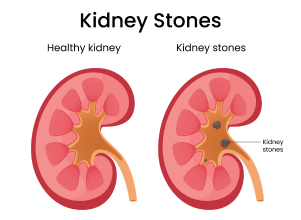
Kidney Stone Disease
Kidney stone disease occurs when hard, crystal-like deposits form inside the kidneys. These stones develop from minerals and salts that concentrate in the urine, usually when the body is dehydrated or when certain substances build up to high levels.
A stone may remain in the kidney without causing trouble, or it may travel down the urinary tract; often leading to sudden, intense pain. While kidney stones can be extremely painful, they are common and highly treatable. With timely care, most people recover well and can prevent future stones.
Symptoms of Kidney Stone Disease
Kidney stone symptoms often begin abruptly, especially when a stone moves into the ureter (the tube connecting the kidney to the bladder). The pain can come in waves and may shift as the stone moves.
Common symptoms include:
- Severe, sharp pain in the side, back, or lower abdomen
- Pain during urination
- Blood in the urine (pink, red, or brown discoloration)
- Frequent or urgent need to urinate
- Burning sensation while urinating
- Nausea and vomiting due to intense discomfort
- Cloudy or foul-smelling urine
- Fever and chills, which may suggest an infection and require urgent care
Not everyone has all symptoms; small stones may pass with only mild discomfort, while larger stones can cause significant distress.
Diagnostic Tests
To identify kidney stones and understand their size, location, and impact, doctors typically recommend a combination of urine, blood, and imaging tests.
Urine Tests
- Urine routine and microscopy to detect blood, crystals, or signs of infection
- Urine culture to rule out bacterial infection
Blood Tests
- Kidney function tests to check how well the kidneys are working
- Electrolytes to look for imbalances
- Calcium and uric acid levels, which help determine stone type and cause
Imaging Tests
These are essential to confirm the presence and size of stones:
- Ultrasound (USG KUB) (a safe, commonly used screening tool)
- X-ray KUB (helpful for certain types of stones)
- Non-contrast CT scan (NCCT KUB) (the gold-standard test for accurate diagnosis)
Treatment
Treatment depends on the size and location of the stone, the severity of symptoms, and whether an infection is present. Many small stones pass on their own, while larger ones may require medical or surgical intervention.
Conservative Management
Often recommended for smaller stones that are likely to pass naturally:
- Drink 2.5–3 liters of water daily to flush the urinary tract
- Pain relief medications to manage discomfort
- Antibiotics if an infection is detected
- Medications such as tamsulosin to help relax the ureter and ease stone passage
Procedures (if needed)
If a stone is too large, causing blockage, or not passing on its own, minimally invasive treatments may be required:
- ESWL (Shockwave Lithotripsy)
Uses sound waves to break stones into smaller pieces
- URS / RIRS (Ureteroscopy)
A thin scope is used to remove or treat stones in the ureter or kidney
- PCNL / MINIPERC (Percutaneous Nephrolithotomy)
A keyhole procedure for large or complex kidney stones
Prevention
Preventing future stones is just as important as treating the current one. Long-term habits play a major role in reducing risk.
- Drink plenty of water every day to keep urine diluted
- Reduce salt intake, which helps lower calcium levels in urine
- Limit animal protein such as red meat and seafood
- Avoid excessive oxalate-rich foods (spinach, nuts, chocolate, beets, etc.)
- Maintain a healthy body weight through balanced diet and activity