
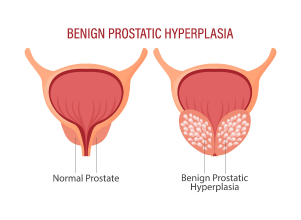
Benign Prostatic Hyperplasia (BPH) – Enlarged Prostate Gland in Adult Men
Benign Prostatic Hyperplasia, commonly known as BPH, is a non-cancerous enlargement of the prostate gland. It is one of the most common conditions affecting adult men, especially those over the age of 50. As the prostate grows, it can press against the urethra, the tube through which urine passes, and this can lead to a range of urinary symptoms.
While BPH can be uncomfortable and may interfere with daily life or sleep, it is not cancer. With timely evaluation and proper treatment, most men experience significant relief.
Common Symptoms of Benign Prostatic Hyperplasia
BPH symptoms are generally grouped into two categories: storage (irritative) symptoms and voiding (obstructive) symptoms. Some men may experience one group more than the other, while many experience a mix of both.
Storage (Irritative) Symptoms
These symptoms occur because the bladder becomes overactive or sensitive due to obstruction.
- Frequent urination
- Urgency (a sudden, strong urge to pass urine)
- Waking up multiple times at night (nocturia)
- Occasional urinary leakage
Voiding (Obstructive) Symptoms
These occur when the enlarged prostate blocks the free flow of urine.
- Slow or weak urine stream
- Difficulty starting urination
- Straining to pass urine
- Feeling of incomplete bladder emptying
- Dribbling at the end of urination
Red-Flag Symptoms
These symptoms may indicate complications and require immediate medical attention:
- Inability to urinate
- Blood in the urine
- Fever with burning urination
- Severe lower abdominal pain
Diagnostic Tests for Benign Prostatic Hyperplasia
To confirm BPH and understand its severity, your doctor may recommend a few simple tests. These help rule out infections, assess prostate size, and check how well the bladder and kidneys are functioning.
Physical Examination
- Digital Rectal Examination (DRE): Helps assess the size, shape, and consistency of the prostate.
Urine Routine Test
- Checks for signs of infection, inflammation, or blood.
Blood Tests
- Serum creatinine: Evaluates kidney function
- PSA (Prostate-Specific Antigen): Used selectively to rule out prostate cancer when needed
Ultrasound – Kidney, Bladder, and Prostate
- Measures prostate size
- Assesses bladder wall and post-void (after urination) residual urine
Uroflowmetry
- A quick, non-invasive test that measures the speed and pattern of urine flow.
Treatment for Benign Prostatic Hyperplasia
Treatment for BPH depends on the severity of symptoms and how much they interfere with daily life. Many men start with lifestyle changes or medications, while others may eventually need minimally invasive procedures.
Lifestyle Measures
Simple daily habits can significantly ease symptoms:
- Reduce fluid intake in the evening
- Limit caffeine and alcohol
- Avoid holding urine for long periods
- Practice double voiding (try urinating again a few minutes after the first attempt)
- Stay physically active
- Treat constipation, which can worsen urinary symptoms
Medications
Alpha-blockers (e.g., tamsulosin, silodosin)
- Relax the muscles of the prostate and bladder neck
- Improve urine flow, often within a few days
5-Alpha Reductase Inhibitors (e.g., finasteride, dutasteride)
- Help shrink the prostate
- Effects appear gradually over several months
In many cases, combination therapy provides the best symptom control.
When Is Surgery Considered?
Surgery becomes an option when symptoms remain severe despite medication, or when complications develop. These may include:
- Persistent or worsening symptoms
- Inability to pass urine (retention)
- Recurrent urinary tract infections
- Bladder stones
- Kidney problems due to obstruction
Several surgical and minimally invasive treatments are available depending on the patient’s condition:
- TURP (Transurethral Resection of the Prostate)
- Laser prostate surgery
- Minimally invasive procedures such as UroLift, Rezūm, or iTIND
These procedures aim to relieve blockage, improve urine flow, and restore quality of life.