
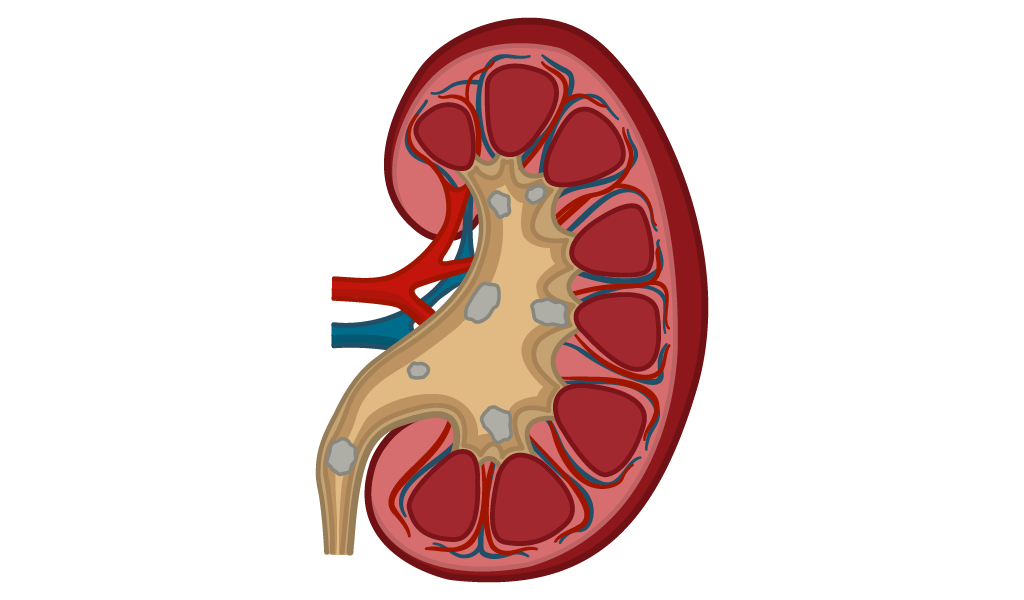
Cystine Stones
Overview
Cystine stones are a rare type of kidney stone caused by a genetic condition called cystinuria. In people with cystinuria, the kidneys release too much of an amino acid called cystine into the urine. Cystine does not dissolve easily, which allows crystals to form and gradually grow into stones.
These stones often begin forming at a young age and tend to come back over time. Compared to more common kidney stones, cystine stones are usually harder, larger, and more challenging to treat. With the right care, however, symptoms can be managed and recurrence can be reduced.
Symptoms
Cystine stones may not cause symptoms when they are small. Problems usually begin when a stone moves within the kidney or blocks urine flow.
Common symptoms include:
- Severe pain in the side, back, or lower abdomen
- Pain that comes in waves and changes intensity
- Blood in the urine, which may appear pink, red, or brown
- Nausea and vomiting
- Pain or burning while passing urine
- Frequent urge to urinate
- Cloudy or foul-smelling urine
In some cases, cystine stones may lead to repeated urinary tract infections, which can cause fever and chills.
When to See a Doctor
Seek medical care right away if you have:
- Severe or persistent pain that does not improve
- Blood in the urine
- Fever with chills
- Difficulty passing urine
Early evaluation is especially important if you have a known family history of kidney stones or cystinuria.
Causes
Cystine stones develop due to cystinuria, an inherited condition that affects how the kidneys handle certain amino acids.
Normally, the kidneys filter amino acids and reabsorb them into the bloodstream. In cystinuria, this reabsorption does not work properly. As a result, excess cystine spills into the urine, where it can crystallize and form stones.
This condition is genetic, meaning it is passed down from parents. Lifestyle factors alone do not cause cystine stones, but they can influence how often stones form.
Risk Factors
You may be at higher risk of developing cystine stones if:
- You have cystinuria or a family history of the condition
- You developed kidney stones at a young age
- You have recurrent kidney stones despite preventive measures
- You produce concentrated urine due to low fluid intake
Unlike other kidney stones, cystine stones are not strongly linked to diet or lifestyle alone.
Complications
If cystine stones are not treated or keep recurring, they can lead to long-term problems, including:
- Recurrent kidney stone episodes
- Frequent urinary tract infections
- Blockage of urine flow
- Kidney damage over time
- Reduced kidney function in severe cases
Ongoing monitoring and preventive care play a key role in protecting kidney health.
Diagnosis
To confirm cystine stones, doctors may use a combination of tests. These help identify the stone type and assess kidney function.
Common diagnostic tests include:
- Urine tests to measure cystine levels
- Blood tests to check kidney function
- Imaging tests such as ultrasound or CT scan
- Analysis of passed or removed stones
Because cystine stones are rare, accurate diagnosis is essential to guide the right treatment plan.
Treatment Options
Treatment depends on the size, location, and number of stones, as well as how often they recur.
Management may include:
- Increased fluid intake to dilute urine and reduce cystine concentration
- Medications that help make cystine more soluble in urine
- Urine alkalinization, which helps prevent crystal formation
- Pain management during stone passage
For larger or stubborn stones, procedures may be needed, such as:
- Minimally invasive stone removal techniques
- Endoscopic or surgical interventions when stones do not pass naturally
Treatment plans are usually long-term, focusing not just on removing stones but on preventing future ones.
Prevention
While cystinuria cannot be cured, consistent preventive care can significantly reduce stone formation.
Prevention strategies often include:
- Drinking large amounts of water throughout the day
- Following prescribed medications regularly
- Monitoring urine composition through routine testing
- Ongoing follow-up with a kidney specialist
Long-term care and lifestyle adjustments are key to minimizing complications and maintaining kidney health.